Etched in Stone: Honoring the TrailblazingWomen of Ohio’s Cities
October 22, 2026
A permanent place for Ohio women at the Statehouse
On Oct. 14, 2026, the Ohio Women’s Monument was unveiled on the South Plaza of the Ohio Statehouse in Columbus. Ohio is now the second state, after Virginia, to dedicate a monument honoring women on its Statehouse grounds.
The $2.5 million monument brings together etched granite and bronze to honor generations of Ohio women. Nine bronze figures stand before three of its four granite columns, while the fourth remains open, symbolizing the women who will shape Ohio’s future and the stories still to come.
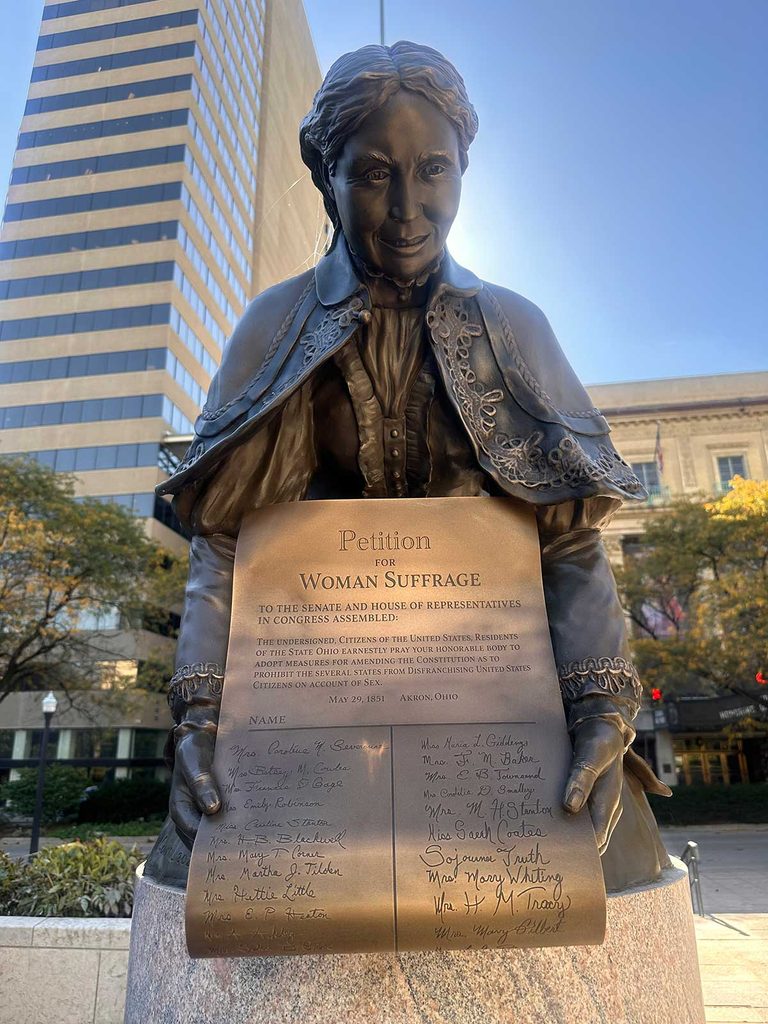
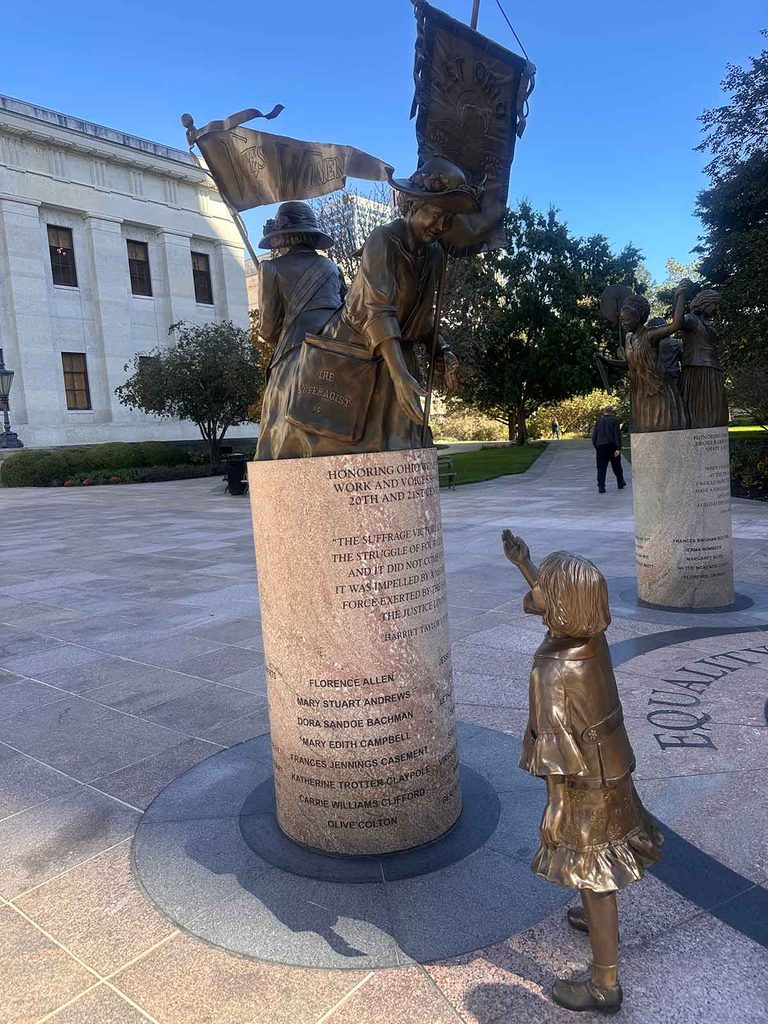
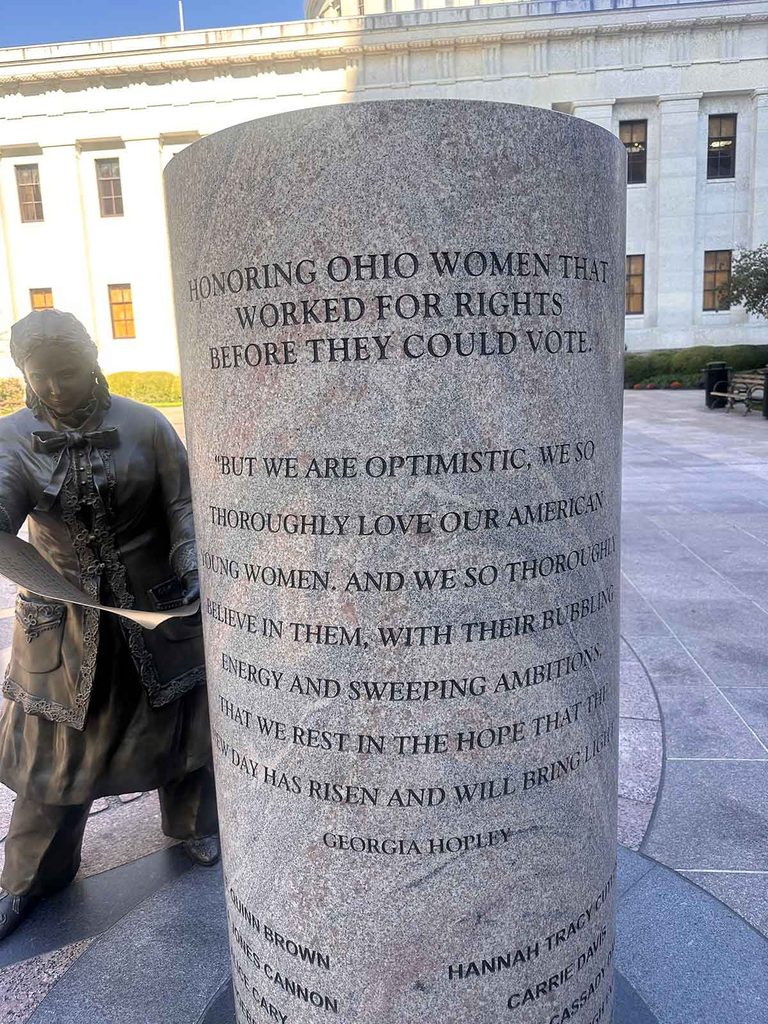
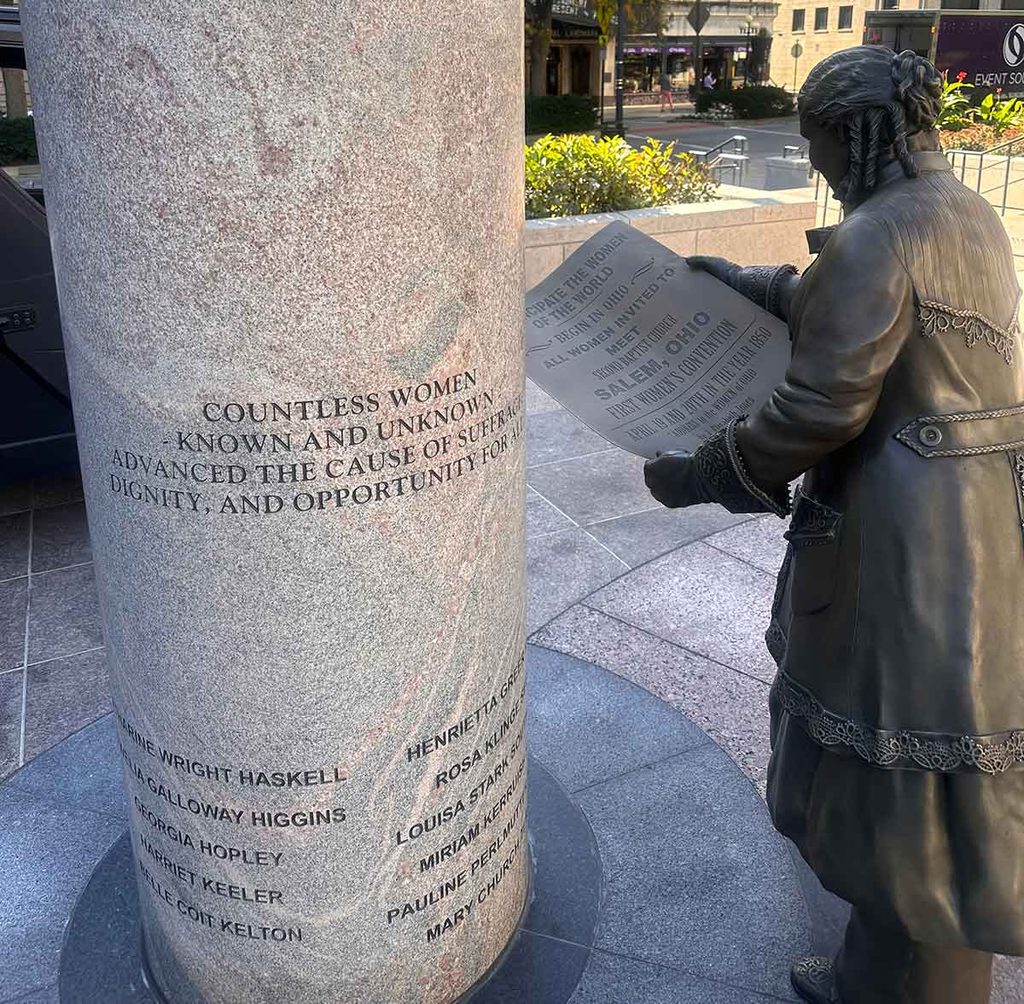
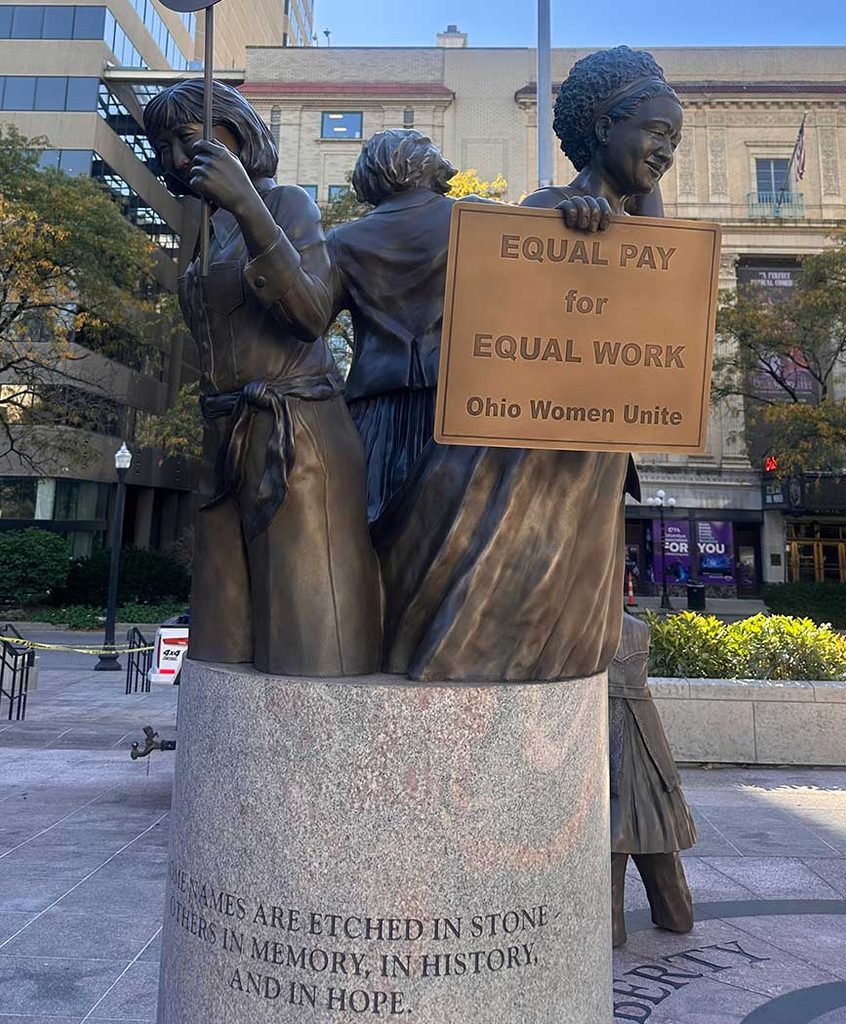
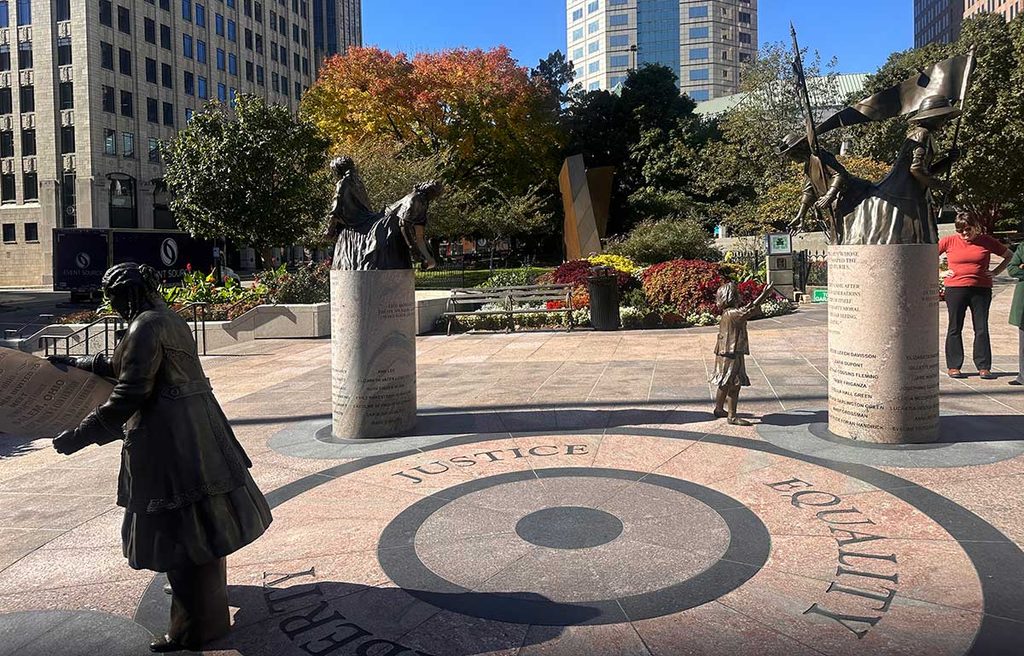
The figures do not depict specific women. They are meant to represent all Ohio women, from the suffragists of the 1850s to today. One figures steps down from her pedestal as a young girl reaches toward the women above her, connecting the achievements of past generations with the possibilities ahead. One inscription reads, “Some names are etched in stone, others in memory, in history, and in hope.”
Sculptor Brenda Councill spent more than a year on the piece. The project grew out of the Ohio Women’s Suffrage Centennial Commission, established by the General Assembly, and took more than six years to complete.
Ohio’s cities have been home to women who helped shape the state’s history. As Ohio celebrates the contributions of women through its new Women’s Monument, the Ohio Mayors Alliance is highlighting just a few of those trailblazers who grew up, worked, and made history across the state.
Trailblazers from Ohio’s cities
Jo Ann Davidson: Reynoldsburg
Jo Ann Davidson’s path to the top of Ohio government began in local government. Born in Findlay in 1927, she was elected to Reynoldsburg City Council in 1967. She went on to represent central Ohio in the Ohio House of Representatives from 1981 to 2000. In 1995 she became the first woman to serve as Speaker of the Ohio House. She remains the only woman to have led either chamber of the Ohio General Assembly. She later chaired the first Ohio Casino Control Commission and founded the Jo Ann Davidson Ohio Leadership Institute to prepare women for public office. She died in 2024 at age 97. Davidson’s name is etched on the new monument, and the project received a $1 million gift made in her honor.
Florence Ellinwood Allen: Cleveland
Florence Ellinwood Allen built a career of judicial firsts in Cleveland. A suffragist who practiced law in the city, she became the first woman in the United States appointed as an assistant county prosecutor when she took the position in Cuyahoga County in 1919. In 1920, months after the 19th Amendment was ratified, Allen was elected to the Cuyahoga County Court of Common Pleas. In 1922, Ohio voters elected her to the Supreme Court of Ohio, making her the first woman in the nation to serve on a state’s highest court. In 1934, she became the first woman appointed to a federal appeals court. In 1958, she became the first woman to serve as chief judge of a federal circuit court of appeals. Allen’s name also appears on the Ohio Women’s Monument, recognizing her lasting impact on the legal profession and public service.
Gloria Steinem: Toledo
Gloria Steinem was born in Toledo in 1934. She became one of the most recognized voices of the modern women’s movement as a journalist, author, and organizer. In 1971, she helped found the National Women’s Political Caucus, which works to elect women to public office. In 1972, she co-founded Ms. magazine, which became an influential platform for feminist writing and ideas. She received the Presidential Medal of Freedom in 2013. Steinem died in September 2026 at age 92.
Toni Morrison: Lorain
Toni Morrison was born Chloe Ardelia Wofford in Lorain in 1931 and graduated from Lorain High School before becoming one of America’s most celebrated novelists. Morrison’s novels brought the experiences of Black Americans to the forefront, exploring how the past shapes individual lives, families, and communities. She won the Pulitzer Prize for Fiction in 1988 for Beloved. In 1993, she became the first Black woman to receive the Nobel Prize in Literature. She received the Presidential Medal of Freedom in 2012, and Lorain named an elementary school in her honor. Morrison died in 2019.
Helen Rankin: Cincinnati
Helen Rankin was the first Black woman to serve in the Ohio legislature. She moved to Cincinnati after high school in 1954. When her husband, state Representative James W. Rankin, died in 1978, she was appointed to his seat. She won election to the seat later that year and went on to serve eight elected terms. Rankin championed women’s health, children, and families with low incomes. She introduced legislation requiring insurance coverage for mammograms and Pap screenings four times before it became law in 1992. She was also known for giving constituents her direct phone number. After retiring in 1994, Rankin continued serving her community. She co-chaired a Habitat for Humanity project that built 17 homes in Cincinnati’s Walnut Hills neighborhood.
Rhine McLin: Dayton
Rhine McLin was the first Black woman elected to the Ohio Senate and the first woman to serve as mayor of Dayton. After her father, state Representative C.J. McLin Jr., died, she was appointed to his Ohio House seat in 1989. She was elected to the Ohio Senate in 1994 and later became interim Senate Minority Leader. McLin was elected mayor in 2001 and reelected in 2005. She connected with residents through initiatives such as her “Mayor’s Walks” and frequent rides on the city bus. She worked to build partnerships with Dayton Public Schools and nearby communities.
Melody Stewart: Cleveland
Melody Stewart, born and raised in Cleveland, was the first Black woman elected to the Supreme Court of Ohio and the first elected to any statewide office in Ohio. Before attending law school, she studied music, became a classically trained pianist and worked as a music teacher. Stewart began her legal career as an assistant law director for the cities of Cleveland and East Cleveland. She was elected to the Eighth District Court of Appeals in 2006 and won a seat on the Supreme Court of Ohio in 2018, beginning her term in 2019. She served on the court through 2024. She also chaired Euclid’s Planning and Zoning Board.
Ohio’s future is in our cities
Ohio’s cities are where many leaders first step forward, on a council, a school board or a neighborhood board. Their stories remind us that leadership takes many forms and that service to Ohio’s communities leaves a lasting legacy. The monument’s open fourth column is a reminder that the story is not finished. The next generation of women leaders is already at work in our cities, building on the achievements of those who came before them.
VISIT THE MONUMENT
The Ohio Women’s Monument stands on the South Plaza of the Ohio Statehouse in Columbus and is open to the public. Information on Statehouse tours is available at ohiostatehouse.org.