Ohio Mayors Unveil Bold Strategy for the State’s Core Cities
September 16, 2026
On September 3, the Ohio Mayors Alliance celebrated ten years of bipartisan cooperation and looked ahead to the next decade with the unveiling of a bold new roadmap for Ohio’s core cities.
At the event, OMA mayors formally unveiled the Core Cities Strategy for Ohio, a four-part policy agenda urging Ohio’s next governor and the 137th General Assembly to invest in the cities that power the state’s economy.
Statewide Agenda & Core Cities Strategy for Ohio
Ohio has a unique competitive advantage over neighboring states. Our Core Cities Strategy would leverage Ohio’s core cities to power a resurgence for Ohio.
View the Full Report →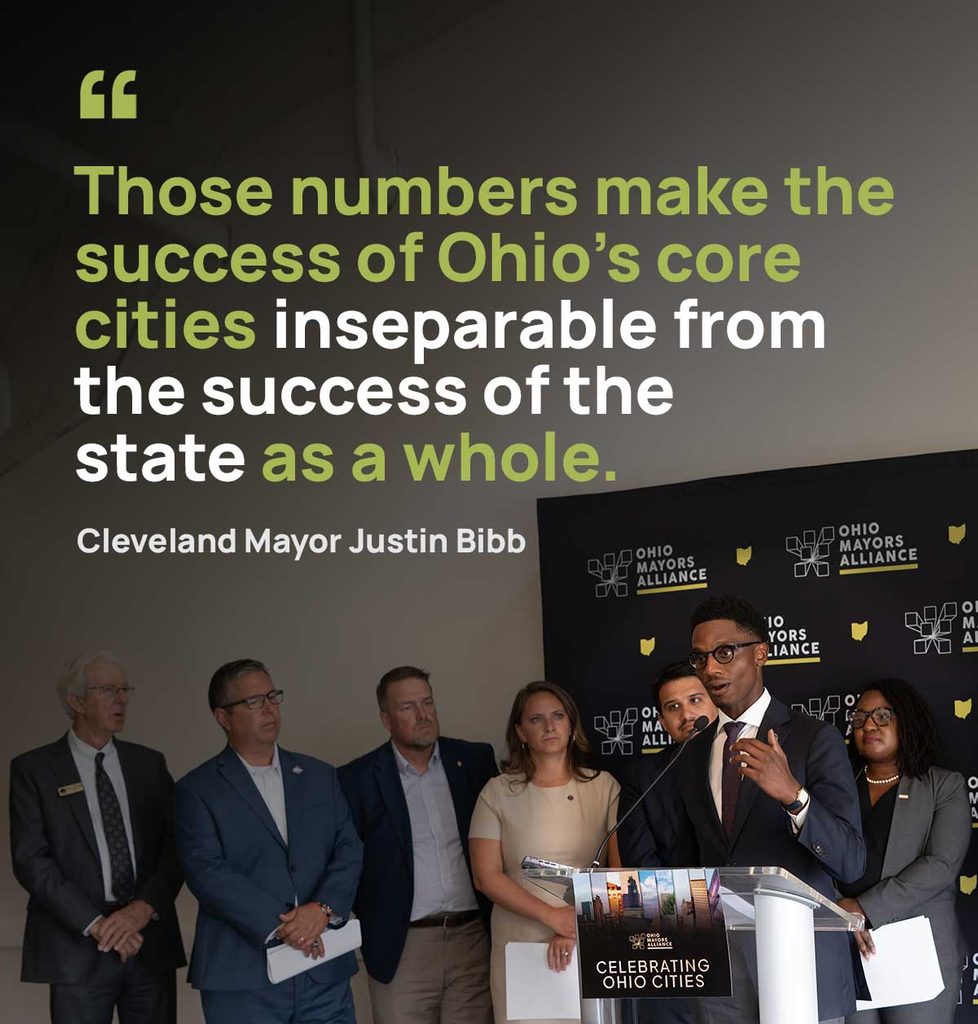
A Strategy for Ohio’s Economic Future
Ohio’s core cities and metro regions account for 71 percent of the state’s population, 76 percent of its jobs, nearly 90 percent of its GDP, and more than 75 percent of its income and sales tax collections, according to the report OMA released at the luncheon.
As Cleveland Mayor Justin Bibb put it, those numbers make “the success of Ohio’s core cities inseparable from the success of the state as a whole.”
That message echoed throughout the panel discussion, “The Next Ten Years: How Cities Can Power a Resurgence for Ohio.” Springfield Mayor Rob Rue opened by outlining why Ohio needs a core cities strategy. Following his remarks, four mayors presented specific recommendations, highlighting how each statewide policy proposal responds to local opportunities and challenges.
Power a Resurgence: The Ohio Core Cities Transformation Fund
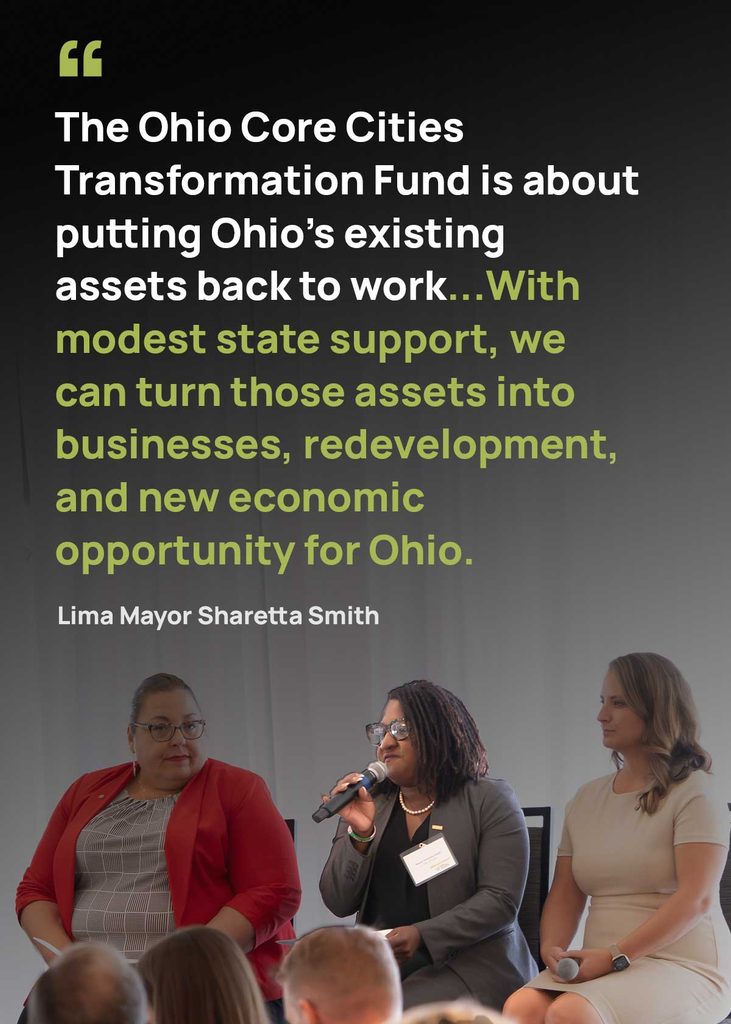
Lima Mayor Sharetta Smith opened with OMA’s centerpiece recommendation: a new Ohio Core Cities Transformation Fund (OCCTF) that would dedicate 20 percent of the state’s annual growth in sales and use tax collections—an estimated $100 million a year—to competitive grants and zero-interest loans for site preparation, infrastructure, and redevelopment in core cities.
No new taxes. No cuts to existing state commitments.
Smith described the fund as the missing link between existing state support and the resources needed to move redevelopment projects from initial planning to final gap financing.
“I don’t have to tell a group of mayors about how we can drive through our downtowns, and even in our neighborhoods, and see a project that we have a vision or an idea for, but it is in need of that catalytic funding,” said Smith.
The fund, which would be administered by the Ohio Department of Development, would be open to municipalities, townships, and counties. However, priority would be given to communities that are population and job centers and have aging infrastructure.
“The Ohio Core Cities Transformation Fund is about putting Ohio’s existing assets back to work. Our cities have neighborhoods, downtowns, commercial corridors, and industrial sites that are ready for investment. With modest state support, we can turn those assets into businesses, redevelopment, and new economic opportunity for Ohio,” said Smith.
Targeted Housing Needs
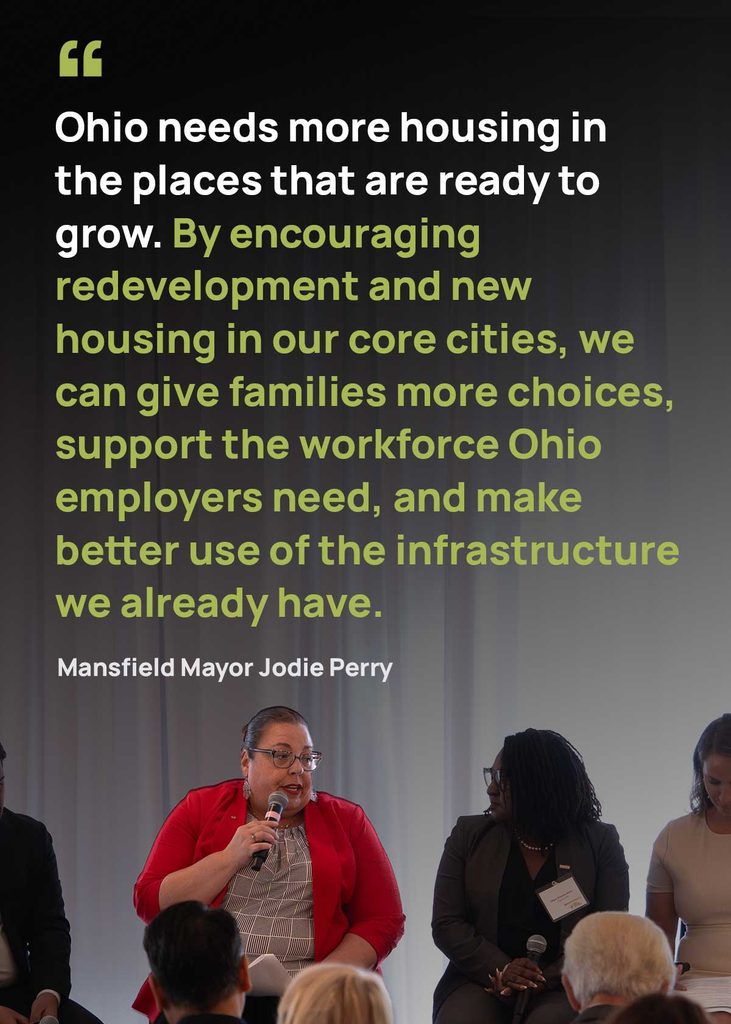
Mansfield Mayor Jodie Perry, who spent 20 years in economic development before taking office in 2024, brought the conversation down to street level.
Mansfield has demolished more than 1,000 vacant, unlivable homes in a city of roughly 48,000 residents, creating both room and need for infill housing. But Perry noted that existing tools such as the state’s Residential Economic Development District (REDD) program require proximity to a large economic development site—a bar many smaller core cities cannot clear.
OMA’s recommendation would extend the REDD model to a new Core Cities Redevelopment District and add a housing infrastructure set-aside within the OCCTF.
That addresses what Perry called the other half of the equation: aging water and sewer systems—including hundreds of non-functioning fire hydrants in Mansfield—that can keep housing projects from penciling out without state help.
“Ohio needs more housing in the places that are ready to grow. By encouraging redevelopment and new housing in our core cities, we can give families more choices, support the workforce Ohio employers need, and make better use of the infrastructure we already have,” said Perry.
Public Safety Enhancement Fund
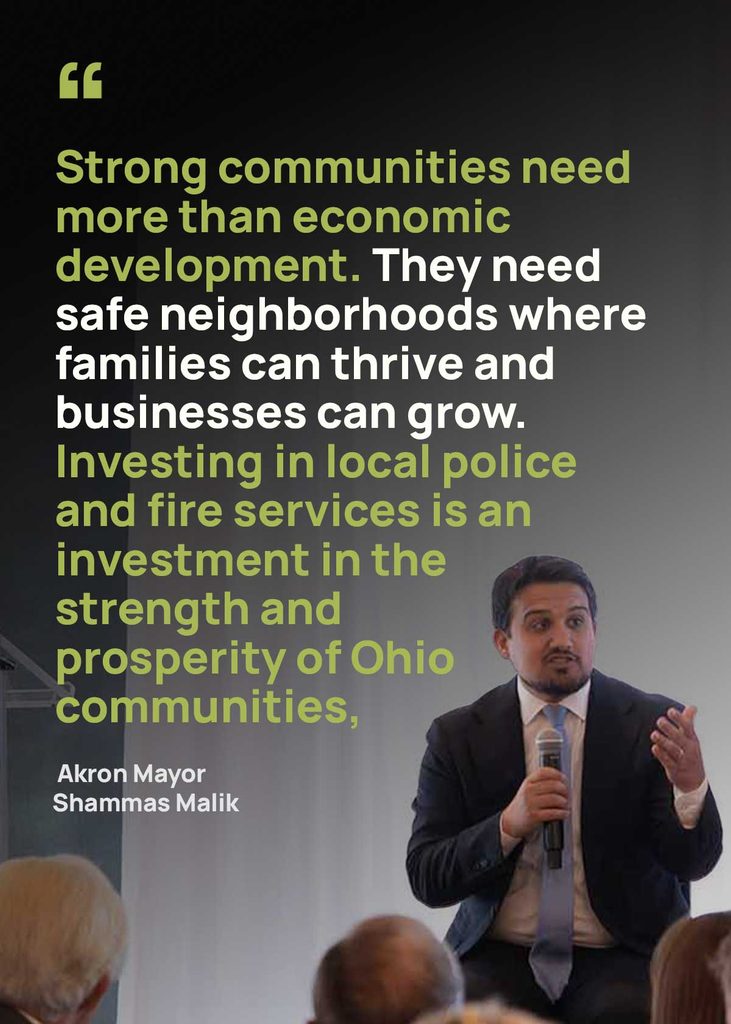
Akron Mayor Shammas Malik tackled public safety, the largest expense in most city budgets.
Cities, villages, and townships across Ohio employ more than 30,000 police and fire personnel and spend upward of $3 billion a year on those services, commonly representing 60 to 70 percent of a city’s general fund.
Malik pointed to his own experience. After his first year in office, a wave of Akron police and fire positions came off expiring federal grants, forcing the city to absorb those costs directly into its general fund. Akron later negotiated some of the largest police and fire wage increases in recent memory—a win Malik said state support should make easier to sustain.
OMA’s proposed Public Safety Enhancement Fund would provide state dollars equal to 10 percent of what municipalities and local governments already spend on police and fire payroll—an estimated $320 million annually—to help communities hire, train, and retain first responders.
OMA also plans to reconvene its Public Safety 360° Coalition of mayors, police and fire leaders, and business groups in 2027.
“Strong communities need more than economic development. They need safe neighborhoods where families can thrive and businesses can grow. Investing in local police and fire services is an investment in the strength and prosperity of Ohio communities,” said Malik.
Reset the State-Local Partnership
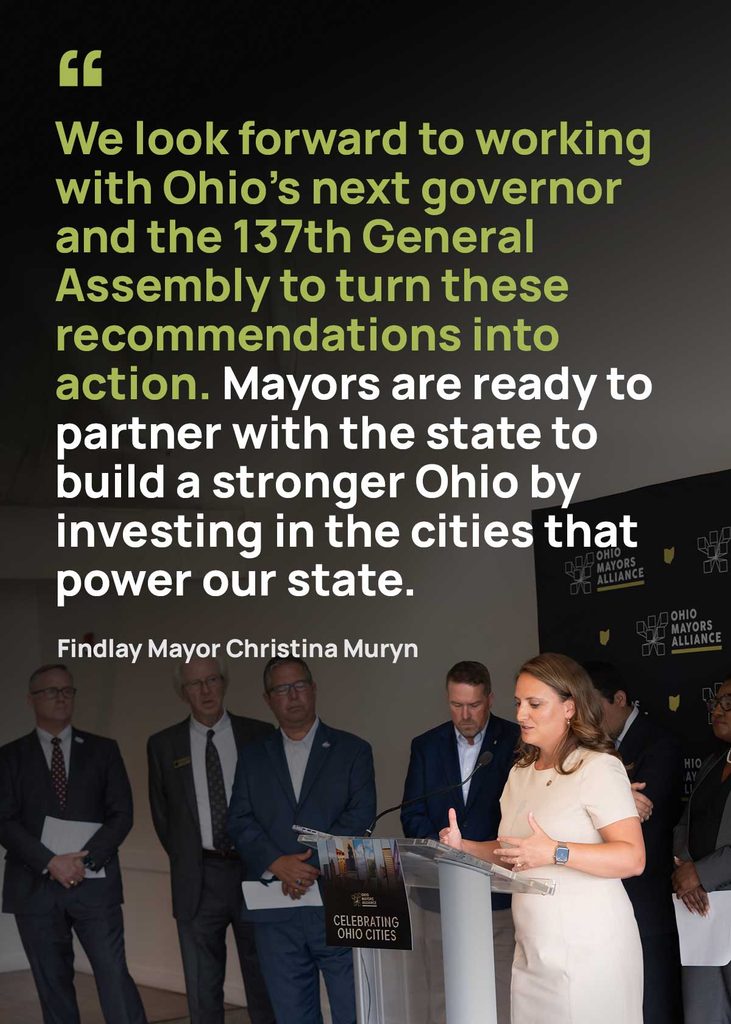
Findlay Mayor Christina Muryn closed the panel with a reminder that none of the first three recommendations can go far without a strong partnership between the state and the cities responsible for putting them into action.
Muryn pointed to the tensions of recent years, including cuts to the Local Government Fund and home rule disputes that increasingly end up in court. She argued for a more proactive relationship between the state and local governments.
OMA’s recommendation calls for:
- A bipartisan task force to review state revenue sharing;
- A state technical assistance team to help smaller communities that lack the staff or expertise of larger cities;
- A Home Rule Commission to resolve disputes before they become litigation; and
- A new Local Government Association Council to give local governments a single, more formal channel for communicating with the state.
“We look forward to working with Ohio’s next governor and the 137th General Assembly to turn these recommendations into action. Mayors are ready to partner with the state to build a stronger Ohio by investing in the cities that power our state,” said Muryn.
Together, the four recommendations are designed to align state and local priorities and put Ohio’s geographically balanced network of cities to work strengthening population and economic growth statewide. The message from OMA’s mayors was clear: Ohio’s cities are ready to lead, and with the right partnership from the state, they can help build a stronger future for the entire state.